Advance exploration science - without leaving Earth
ESA provides scientists with unique opportunities to investigate spaceflight-relevant conditions through ground-based analogue platforms. These facilities enable research on humans, biological systems, materials, and technologies under controlled, space-like stressors—such as microgravity, isolation and confinement, altered atmospheres, and hypergravity. The outcomes inform diagnostic tools, countermeasures, life-support systems, and protective technologies for future missions, while delivering innovations that benefit society on Earth (e.g., medical protocols, engineering solutions).
What you can study
- Human health & performance: physiological adaptation, neuroscience, psychology, sensorimotor function, exercise, and countermeasures
- Life sciences & astrobiology: microbial survival, bioengineering, biofabrication, and habitability
- Physical & material sciences: fluid physics, structures, propulsion-relevant phenomena, fire safety, and planetary environment simulations
Our Facilities
Platforms for simulating space-relevant conditions: Microgravity analogues, hypergravity, isolation/confinement, immersion, operational training, and planetary environment studies.
- Micro G Lab, DLR, Cologne, Germany (link here)
- Vertical Treadmill Facility (VTF), Innsbruck, Austria (link here)
- :envifuge (Hyperscope), DLR, Cologne, Germany (link here)
- Short Arm Human Centrifuge, MEDES, Toulouse, France (link here)
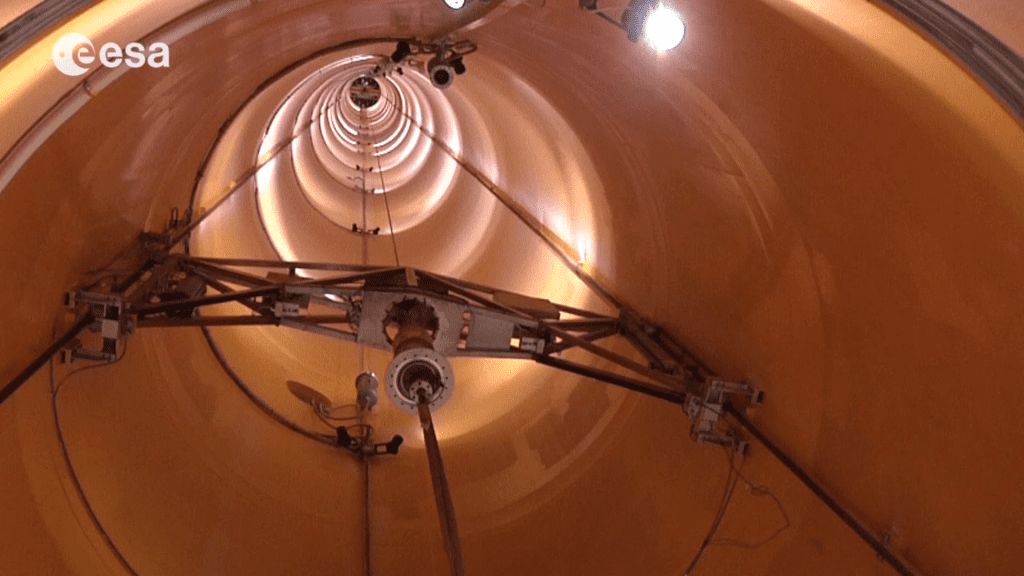
- Large Diameter Centrifuge (LDC), ESTEC, Noordwijk, The Netherlands (link here)
- Medium-Sized Centrifuge for Acceleration Research (MidiCar), ESTEC, Noordwijk, The Netherlands (link here)
- Neutral Buoyancy Facility (NBF), EAC, Cologne, Germany (link here)
- Scientific Group of Space Biology and Medicine (GSBMS), Toulouse, France (link here)
- Astrobiology Space Simulation facilities (ABYSS), DLR, Cologne, Germany (link here)
- Gravitational Experimental Platform for Animal Models (GEPAM), Lorraine, France (link here)
- Locomotion on Other Planets – Hypergravity Analogue (LOOP), Milan, Italy (link here)
- DESDEMONA motion platform, Soesterberg, Netherlands (link here)
- Planica Planetary Habitat (PlanHab), Planica, Slovenia (link here)
- Aarhus Planetary Environment Facility, Aarhus, Denmark (link here)
- European Shock-Tube for High Enthalpy Research (ESTHER), Lisbon, Portugal (link here)
- Facility for Fire Safety for Space Exploration (FRISSBE), ZAG, Slovenia (link here)
European 3D Bioprinting Consortium
- 3D Bioprinting Lab, TU Dresden, Germany (link here)
- Henry Royce Institute – Bioprinting Technology Platform, University of Manchester, Manchester, UK (link here)
- Biofabrication Laboratory of Biomaterials Group, Warsaw University of Technology, Warsaw, Poland (link here)
- Biofabrication Laboratory at the Research Center E. Paggio, University of Pisa, Pisa, Italy (link here)
- 3d FAB, Université de Lyon, Lyon, France (link here)
- BIO-ORBIT, Regenerative Medicine Technologies Lab, Bellinzona, Switzerland (link here)
Scope
Studies should address the effects of space on humans and/or biological life as well as physical/material systems, using ground-based experimental setups. Data generated should improve knowledge in areas such as diagnosis tools, countermeasure protocols, microbial resilience, shielding and protection strategies, and systems engineering for exploration.
How to participate
Submit proposals via the following link: Open Space Innovation Platform – OSIP – Channel: HRE Exploration Science CORA – Ground-Based Facility (GBF)